
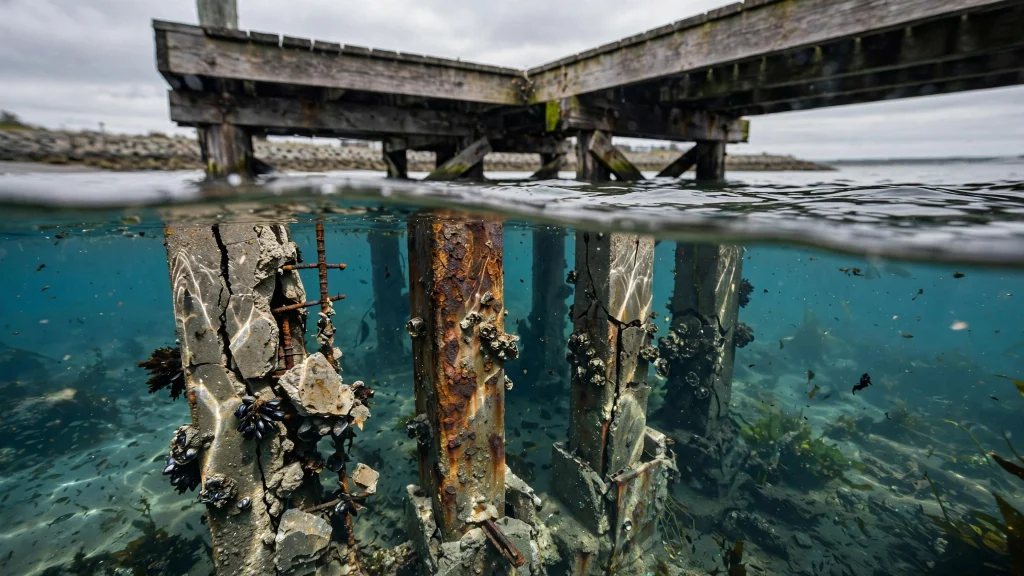
A Marine Structure faces constant pressure from waves, tides, corrosion, and marine growth. These forces gradually weaken critical components below the waterline. Many problems remain hidden until they become expensive repairs or serious safety risks. Regular underwater inspections help identify damage before it affects structural performance or compliance.
Owners, engineers, and facility managers benefit from early detection because timely maintenance extends service life and reduces unexpected downtime. Professional underwater inspections combine visual assessments, underwater imaging, and engineering expertise to evaluate submerged conditions accurately. Understanding the warning signs allows us to plan inspections before small issues develop into costly structural failures.
Why Underwater Inspections Matter for Every Marine Structure
A Marine Structure operates in one of the world’s harshest environments. Saltwater accelerates corrosion, while waves and vessel impacts place continuous stress on structural components. Hidden deterioration often progresses unnoticed because most damage occurs beneath the water surface.
Routine underwater inspections provide valuable information about structural health. According to engineering practices recommended by organizations such as the American Society of Civil Engineers (ASCE) and the U.S. Army Corps of Engineers, periodic inspections improve maintenance planning and reduce lifecycle costs. Professional divers and remotely operated vehicles (ROVs) document defects before they threaten safety or operations.
Key Benefits of Regular Inspections
- Detect corrosion before it spreads.
- Identify cracks and structural movement.
- Evaluate marine growth accumulation.
- Verify scour around foundations.
- Support regulatory compliance.
- Reduce emergency repair costs.
- Extend asset lifespan.
Visible Surface Damage May Indicate Hidden Problems
Surface damage often signals larger underwater concerns. Rust stains, cracked concrete, displaced joints, or exposed reinforcing steel rarely develop without related deterioration below the waterline. Ignoring these visible symptoms allows damage to expand into structural elements that are difficult and expensive to repair.
Experienced marine engineers evaluate both above-water and underwater conditions because defects frequently connect across the entire structure. A comprehensive inspection provides the complete picture needed for accurate maintenance planning. Addressing early warning signs reduces repair costs and improves long-term structural reliability.
Common Surface Warning Signs
| Visible Sign | Possible Underwater Cause | Recommended Action |
|---|---|---|
| Rust streaks | Corrosion of steel piles | Schedule inspection |
| Concrete cracks | Foundation movement | Structural assessment |
| Spalling concrete | Reinforcement corrosion | Immediate evaluation |
| Uneven deck levels | Settlement or scour | Underwater survey |
| Loose fenders | Impact damage | Diver inspection |
Increased Marine Growth Can Hide Serious Damage
Marine organisms naturally attach to submerged structures over time. Barnacles, mussels, algae, and oysters create thick layers that conceal corrosion, fractures, and coating failures. Heavy marine growth also increases structural loading and accelerates material degradation.
A professional underwater inspection removes or evaluates marine growth where necessary. Engineers inspect exposed surfaces using specialized equipment to identify defects that remain invisible during routine visual checks. Accurate documentation helps prioritize repairs based on structural condition rather than assumptions.
Why Marine Growth Matters
Dense biological growth creates several operational concerns.
- Hides cracks and corrosion.
- Increases hydrodynamic loading.
- Reduces inspection visibility.
- Accelerates coating deterioration.
- Raises maintenance costs over time.
Changes in Water Conditions Can Affect Your Marine Structure
Environmental changes frequently alter underwater foundation stability. Strong storms, flooding, tidal currents, and vessel propeller wash gradually remove sediment supporting piles or seawalls. This process, known as scour, remains one of the leading causes of marine infrastructure damage worldwide.
When water depth changes unexpectedly or erosion becomes visible around the shoreline, an underwater inspection becomes essential. Engineers assess foundation exposure, sediment movement, and structural stability using sonar, diver observations, and underwater measurements. Early detection prevents foundation failures and supports long-term operational safety.
Environmental Risks to Monitor
Several environmental conditions increase inspection urgency.
- Severe storms and hurricanes.
- Strong tidal currents.
- Heavy commercial vessel traffic.
- Flood events.
- Coastal erosion.
- Sediment displacement.
Aging Infrastructure Requires More Frequent Assessments
Every Marine Structure experiences material aging regardless of construction quality. Steel corrodes, concrete deteriorates, timber decays, and protective coatings lose effectiveness over decades of service. Older facilities require more frequent inspections because deterioration accelerates with age and environmental exposure.
Industry experts recommend condition-based maintenance rather than waiting for visible failures. Facilities operating beyond their original design life benefit from detailed underwater evaluations that identify remaining structural capacity. Inspection records also support budgeting decisions by prioritizing repairs based on measured conditions instead of estimates.
Inspection Frequency Guidelines
| Structure Age | Suggested Inspection Interval |
|---|---|
| Under 10 years | Every 5 years |
| 10–20 years | Every 3–5 years |
| Over 20 years | Every 2–3 years |
| After major storms | Immediate inspection |
| After vessel impact | Immediate inspection |
Structural Movement Should Never Be Ignored
Unexpected movement often indicates developing structural problems beneath the surface. Tilting piles, shifting docks, uneven platforms, or excessive vibration may result from foundation settlement, corrosion, or impact damage. These conditions require prompt underwater investigation before they worsen.
Professional inspection teams compare current measurements with historical records to identify progressive movement. Advanced underwater imaging and precise surveying techniques improve accuracy while reducing uncertainty. Early corrective action protects users, minimizes operational disruptions, and lowers long-term repair expenses.
Expert Evaluation Makes the Difference
Qualified inspection professionals typically perform the following tasks.
- Visual underwater assessment.
- High-resolution underwater photography.
- Video documentation.
- Thickness measurements.
- Crack mapping.
- Foundation evaluation.
- Maintenance recommendations. Explore our latest insights in The Importance of Structural Concrete Cutting in Renovation Projects.
Conclusion
Every Marine Structure benefits from proactive underwater inspections that detect hidden deterioration before it becomes a major problem. Recognizing warning signs early protects safety, reduces repair costs, and extends structural service life. A scheduled inspection provides reliable data that supports informed maintenance decisions and preserves valuable marine infrastructure for years to come.